The Blog●
What happened when we explained AI to a nine-figure property operator
Alex Kaymakanov · CEO, Imperium · 1 August 2026 · 6 min
Chris White has spent 21 years in international real estate across 23 countries, and once sold 79 properties, 58 million dollars' worth, in seven minutes. Doing it took a small army: 27 people on phones, around 30 writers, PR teams, CEOs and CFOs. When my co-founder Archie sat down with him on camera to explain what AI could do for a business like his, Chris arrived as an enthusiast, already a user, already convinced. He still left the conversation saying it was far bigger than he had understood, and designing his own AI clone. The whole conversation is public on Archie's channel, and it is the most honest answer we have to every operator who quietly suspects this is not for them.

The fear in the room
Chris named it on his industry's behalf before Archie could. "You've got fear driven people, and fear stops so many things," he said. "People are fearful thinking, but is it going to replace me? Is it going to lose human contact?" He was describing the people around him rather than himself, and that is the real starting position of most successful operators. People who built their results on relationships do not want a machine between them and their clients.
Archie's answer was an analogy rather than a demo. It is the same thing as an industrial revolution: the machines do the heavy lifting, and the human operator becomes ten times more effective than ten people. Chris's response, on the recording, was "really good analogy." Then Archie collapsed the intimidation factor entirely: "It's not scary at all. It's just chats. Same as how you communicate with chat now, but it has 100 percent context of everything about your business."
Then the demo does the arguing
The turn in the conversation is a live demonstration aimed at Chris's own phone. Chris dictated the request himself: send me a text message with information on current market trends for people looking to purchase property in Bali. Archie routed it to Chris's WhatsApp and fired it off mid-conversation, then carried on talking. No slides and no proposal document, just work Chris watched himself commission.
Once he saw it, Chris produced a better definition of an AI operating system than most people in our industry manage:
"It's 100 different team members, all experts, who never need to sleep, never need to eat. Needs electricity, Wi-Fi. And it's not going to get sick."
Chris White, Explaining AI to Duncan Bannatyne's ex-business partner, on Archie's channel
Why property operators specifically
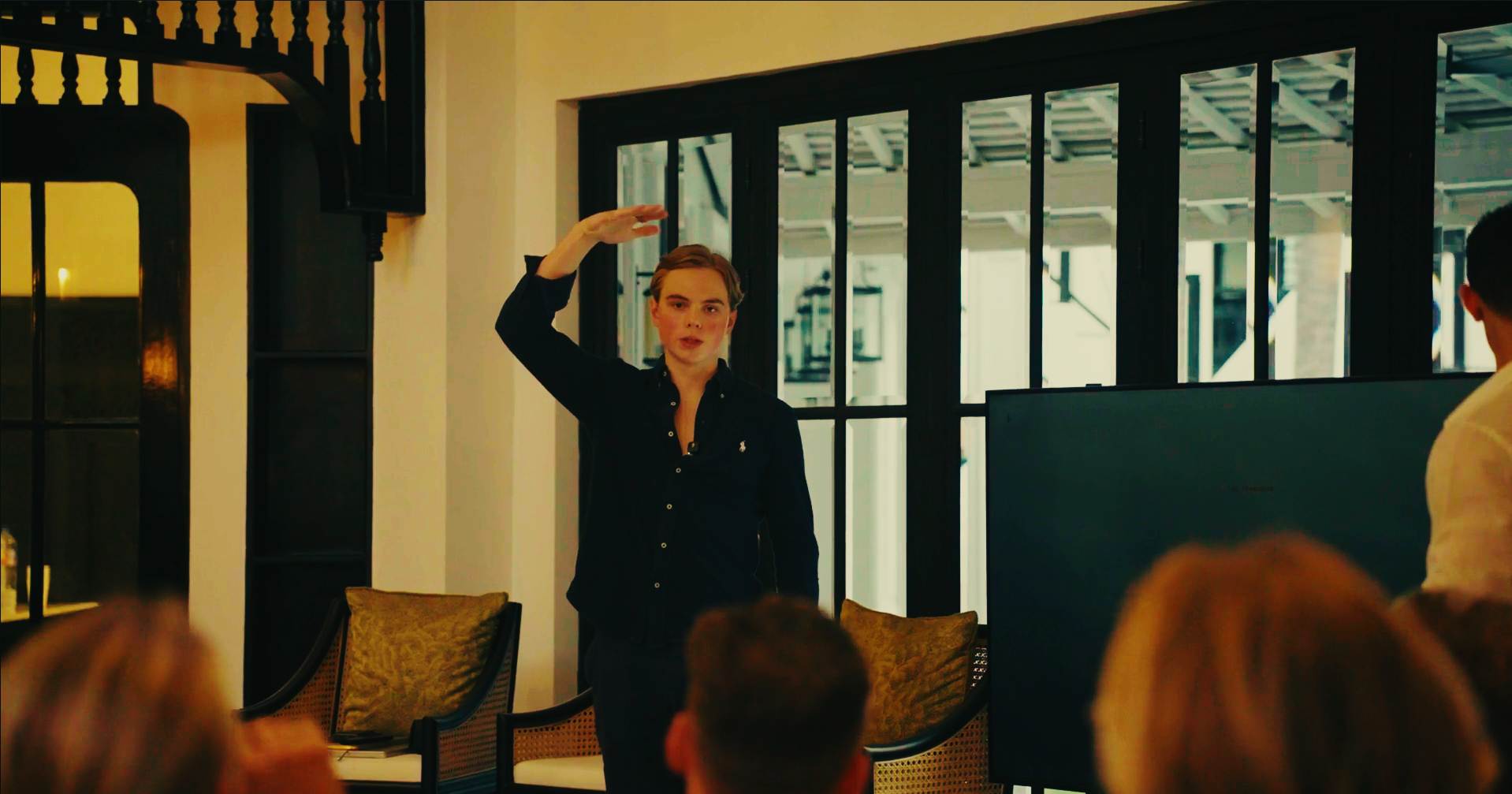
Chris's industry is the clearest case we know for this technology, and we say so with numbers attached in our talks to property audiences. Archie put the room's own sales cycles at seven to ten months when he presented to 35 real estate business owners, and told the same room that most of the industry is fighting for the top 3 percent of buyers who are ready to buy now, while the layer of educable buyers below that is three, four, five times as big.
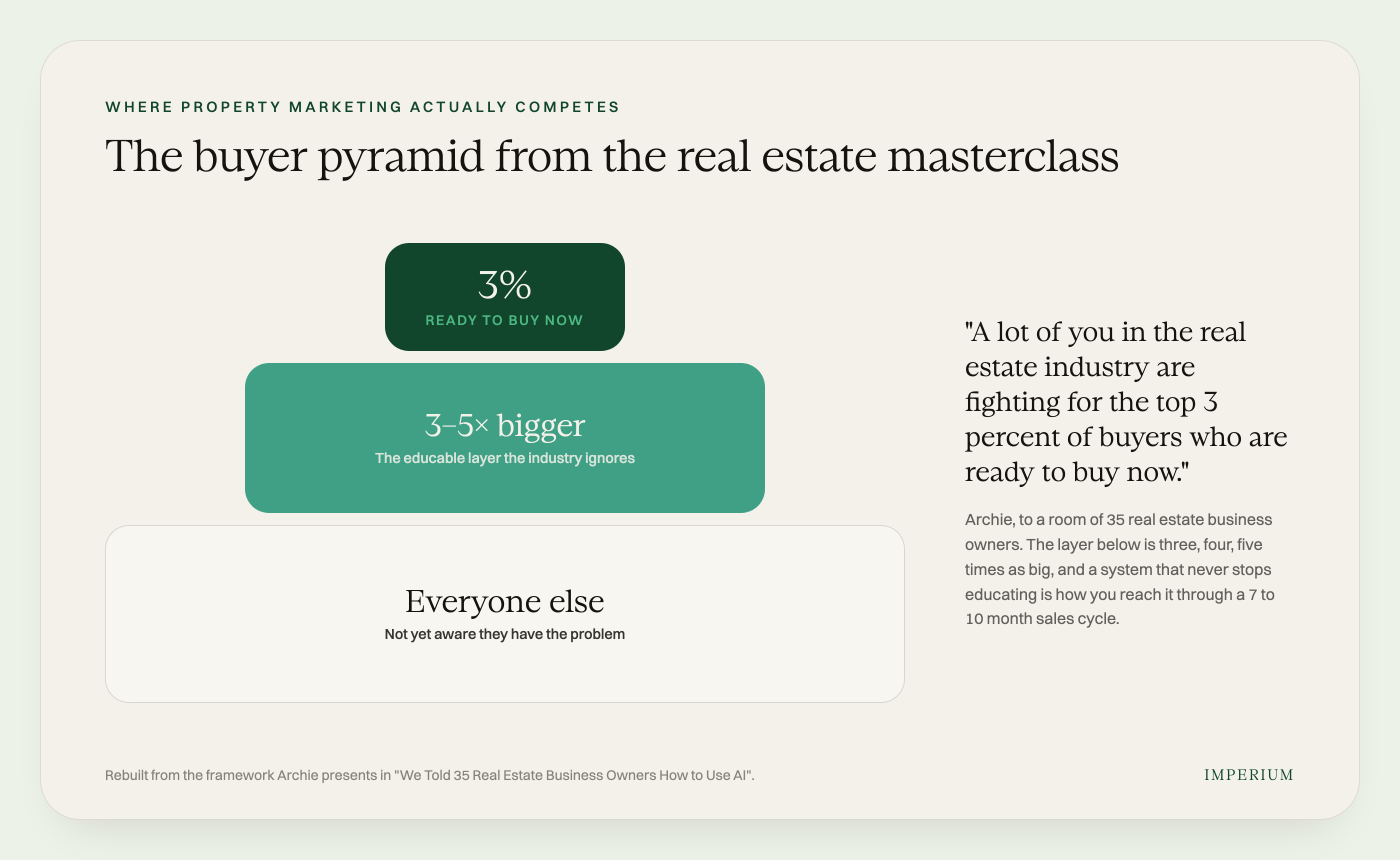
Everything about that picture favours a system that never forgets and never stops. A seven-month sales cycle is seven months of follow-ups, questions and education per buyer, multiplied across every lead the business is nurturing. Operators know this in their bones, which is why the room supplied the sharpest evidence itself. At our own real estate mastermind, one developer admitted their sales were 95 percent referrals, and on marketing added that decisions were "not based on data, it's based on what we think is cool." The machine that used to fix this was Chris's 27 phones and 30 writers. The system that fixes it now fits in a terminal.
The moment the operator starts designing
The best part of the recording is the shift. Mid-conversation, Chris stopped asking what the system does and started asking whether it could scale him: could it download everything he knows, his biggest mistakes included, so his team could ask him questions while he is out driving cars. Archie confirmed it: a second Chris, trained on his email, his WhatsApp and his content, available to his team around the clock.
That is the pattern we see with serious operators. Underneath the technology question there is usually an identity question, and the moment the technology serves the identity, protecting a salesman's relationships, multiplying a founder's judgement, interest turns into appetite. Chris said it plainly on the recording: "So this is way bigger than what I thought it was."
What Chris teaches the rest of us
Three things from that conversation apply to every owner we meet, in property or far from it.
The fear Chris described in his industry is rational and should be answered, never dismissed. The questions about replacement and human contact deserved direct answers, and got them: his salesman is not replaced, in Archie's words, "he can now help more."
The demo beats the deck. Nothing Archie could have presented would have matched one WhatsApp message arriving on Chris's own phone. When we install a system, the first live morning brief does more convincing than every meeting before it.
And the operator's experience is the asset, never the casualty. Chris's 21 years are exactly what the clone gets trained on. The system without him knows nothing worth knowing. His instinct at the end of the conversation was the right one, and his last line on the recording is the one I would put over the door of this industry: "All right, let's do it. Bring it."